 Daily Earth View
Why Clouds Change Daily
•
Explore the ever-shifting tapestry of Earth's clouds, as seen through NASA's EPIC camera from 1 million miles away. These dynamic formations aren't static—they evolve hourly, revealing the pulse of our planet's atmosphere. On DailyEarthView.com, our daily images and time slider bring this change to life, letting you watch clouds form, dissipate, and traverse the globe. Dive into the reasons behind these daily transformations and what they tell us about weather and climate.
The Dynamic Nature of Clouds
Clouds are born from water vapor condensing in the atmosphere, influenced by temperature, humidity, air pressure, and wind. Daily changes stem from Earth's constant motion and solar heating:
- Diurnal Cycles: As Earth rotates, solar energy heats the surface unevenly, causing air to rise and cool, forming clouds in the afternoon over land (e.g., cumulus over continents) while mornings might be clearer.
- Atmospheric Circulation: Global wind patterns, like trade winds and jet streams, push clouds across oceans and land. For instance, intertropical convergence zones create persistent cloud bands near the equator that shift daily with weather fronts.
- Weather Systems: Storms, fronts, and pressure systems drive rapid changes— a clear sky can turn stormy in hours due to incoming low-pressure areas.
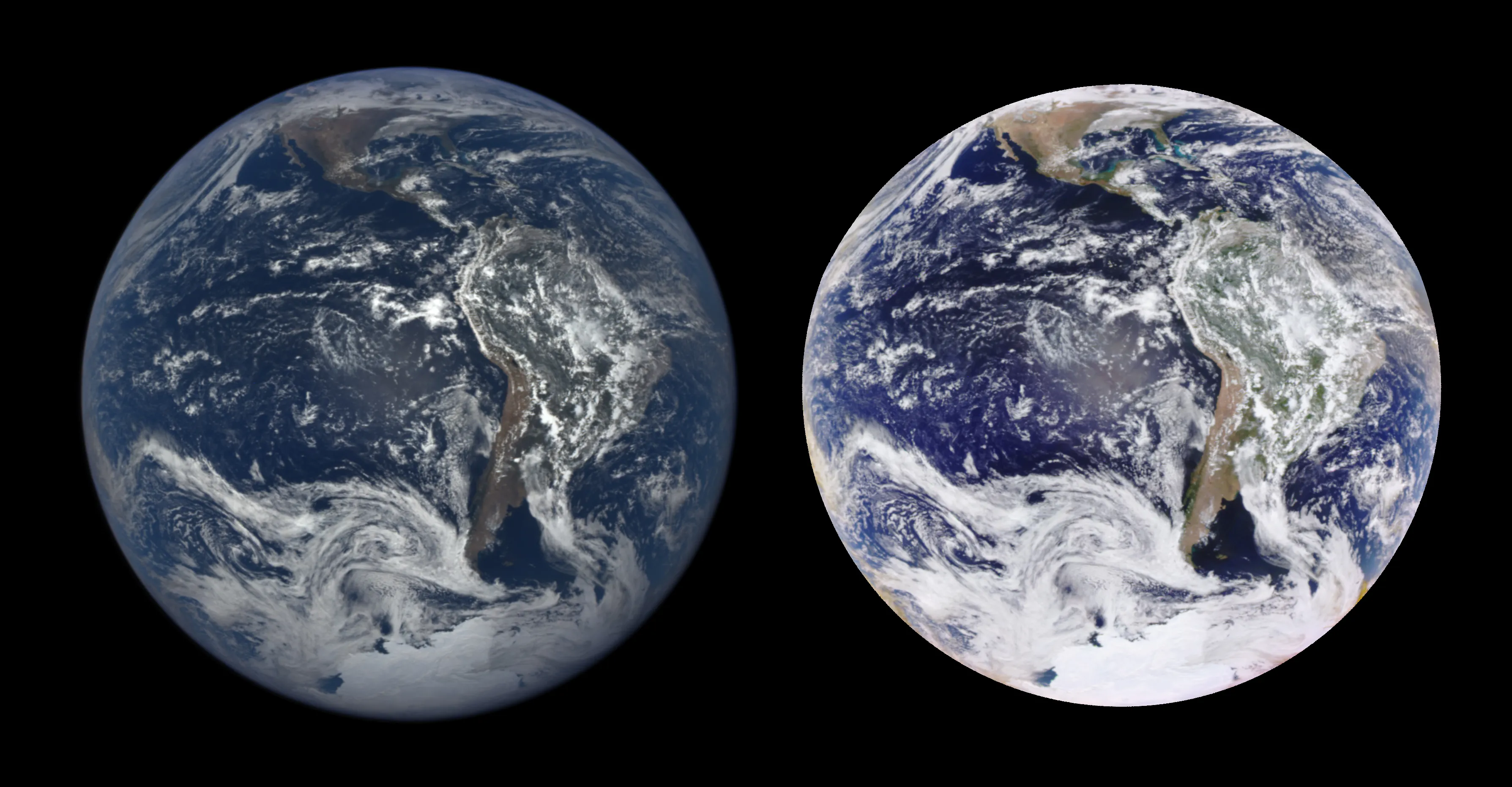
EPIC captures this in 10-13 daily snapshots, showing how clouds over the Pacific might scatter while those over the Amazon thicken, all in natural color for a realistic view. See how rotation brings these changing views into focus as continents rotate into view throughout the day.
How EPIC Reveals Daily Cloud Evolution
From the L1 point, EPIC's full-disk images highlight cloud dynamics without gaps. Over a day, you might see:
- Morning clarity giving way to afternoon convection clouds.
- Tropical cyclones intensifying or dissipating.
- Frontal boundaries sweeping clouds across continents.
Compare side-by-side views from different times or days on our site to spot these shifts—e.g., a hurricane's eye forming or a dust storm obscuring views.
What Clouds Reveal About Weather and Climate
Daily cloud changes are windows into broader systems:
- Weather Forecasting: EPIC data tracks cloud height and reflectivity to predict storms, aiding models for hurricanes or monsoons.
- Climate Trends: Long-term patterns show how clouds respond to warming—thinner high clouds might trap more heat, while increased low clouds could cool the planet. Since 2015, EPIC's archive reveals shifts like reduced Arctic clouds due to melting ice.
- Environmental Indicators: Clouds signal events like wildfires (smoke plumes) or volcanoes (ash clouds), impacting air quality and aviation.
Scientists use EPIC's spectral bands to measure cloud properties precisely, linking daily snapshots to global climate health. Cloud data is one of Earth's vital signs monitored by satellite, helping track the overall health of our planet.
Fun Facts and Why It Matters
- Cloud Coverage: Earth is about 67% cloudy on average, but this fluctuates daily by up to 10% due to seasonal and weather variations.
- Global Impact: Clouds regulate temperature by reflecting 20-30% of sunlight back to space, making their daily changes crucial for energy balance.
- Aesthetic Wonder: These patterns create the "marbled" look of Earth, inspiring art and reminding us of nature's impermanence.
Explore Further
See these changes yourself on DailyEarthView.com. Slide through today's clouds on the homepage or compare seasonal patterns in our archive. Continue learning in our Learn section with topics like Earth's rotation or satellite imagery.
All information based on NASA's EPIC mission. For deeper dives, visit NASA's EPIC page.